Spiga

Harpy eagle nest spotted in Honduras!


Harpy eagle juvenile - Photo by: David Medina

Those who have seen a harpy eagle in the wild can consider themselves extremely lucky. The harpy eagle, the second-largest bird in the planet, hides within the more dense forests of Central and South America, procreate only once every four or five years, and they build their nests hidden in trees above 25-30 meters (80-100 feet), so seeing them is nearly impossible.
Harpy eagle - Photo by: David Medina
This is why the news of finding an active Harpy Eagle nest with a chick is just stunning. This is the first nest found in Honduras, and the third documented throughout Central and North of Panama. Other places where these nests have been seen are Guatemala and Belize.
Harpy eagle - Photo by: David Medina
Patuca National Park in Eastern Honduras, the largest protected area in the country (375,584 hectares : 928,088 acres), created in december 1999, is one of many tropical protected areas where intense preservation projects are taking place, and despite the lack of adequate funding, a handful of scientists conscious and nature enthusiasts, who are part of both Honduran and foreign entities have been conducting important conservation and reforestation efforts which are worthy of praise.
Harpy eagle - Photo by: David Medina

The sighting of this harpy eagle and her newborn has risen the villagers 'pride', increasing conservation awareness among the residents of the surrounding area as well. This important event is a gratifying sign that the continuing efforts of the agencies responsible for the preservation of the area are being productive, since it is well known by experts that the harpy eagle needs at least 150Km2 (58 square miles) of lush forest free of human contact in order to survive.
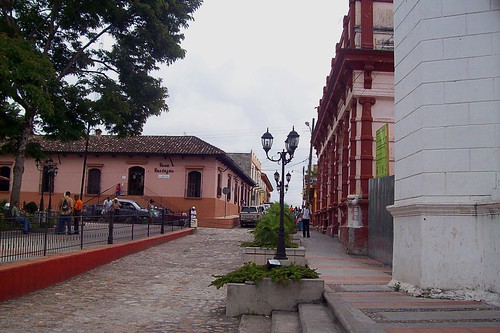
Cine Hispano - Santa Rosa de Copan

Cine Hispano - Santa Rosa de Copan | Flickr - Photo Sharing!

Santa Rosa has a rich cultural heritage and is an appealing stop for tourists. The historical center of the city has been declared a Honduran national monument. Visitors can enjoy the colonial architecture, cobblestone streets and colonial-style houses that demonstrate the preservation of Santa Rosa's culture and history, with its origins in tobacco farming. While visiting the city center you will notice several different architectural styles of the historical buildings.

TRAVELLING IN CENTRAL AMERICA Safe or Dangerous

A truly enlightening article on the current situation of Central America, and the unfortunate misconceptions from traditional media which can lead to unfair treatment to some destinations, such as San Pedro Sula, Honduras. You can read all the article HERE.
"Drugs and guns are a deadly mix.  They can have devastating and lethal consequences not only for the unfortunate victims of violence and their friends and families but also for the city or country’s reputation.   I recently returned from almost two weeks travelling around two of the supposedly most violent and deadliest countries in the world.  This also included what the United Nations Office on Drugs and Crime has named the most dangerous city on earth in 2011 – San Pedro Sula, Honduras." Chris Ryall
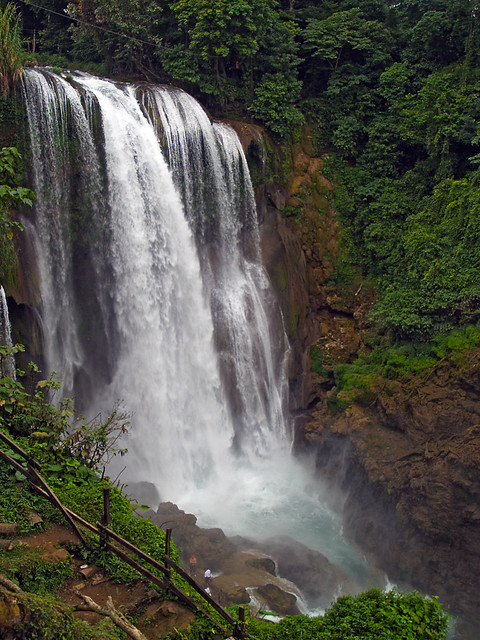
Pulhapanzak waterfall - Photo by Adalberto H. Vega
...

Just quoting a few lines from Canada’s travel advisory on Honduras:  “A large percentage of the population is armed.  Guns and weapons as machetes and knives are frequently used in robberies.  Perpetrators often use violence if the victim resists.”  It goes on, “Travellers have been followed and assaulted.  Use discretion when discussing travel plans in public.”

Well, sounds pretty scary to me.  It details various areas including San Pedro Sula and along the coastal highway and other towns as well as islands where crime occurs.

I travelled in all of these areas both in a group as well as wandered about on my own.  Now did I go down dark alleys in the middle of the night in some residential or gang infested districts? No.  Why would I?   ...
I went on the Government of Canada’s travel advisory for the United States.   It rates barely a mention about any crime compared to the pages it details with Honduras and El Salvador.  Yet in 2011 there were four American cities listed in the top 50 cities for the murders in 2011 – at number 21 was New Orleans (a city I adore and have visited a couple of times), number 30 was Detroit, number 43 was St. Louis, and number 48 was Baltimore. 

Americans have one of the highest gun ownerships in the world yet no mention of that in the travel advisory.  I love the United States and travel there frequently for business and pleasure but it is interesting (and perhaps political since they are our biggest trading partner) how it is downplayed.

Yet it seems hypocritical with the high murder rate in many American cities Canadians and people from other nations don’t give it a moment’s hesitation in visiting.  But at the same time we get up in arms and are afraid to visit other destinations when we hear about any incidents.

I travelled by foot, boat, minivan, air and an old open train car.  I went on hikes just with a guide, snorkelling on islands, went to local bars and restaurants and strolled through street markets in many areas the travel warning said don’t go.
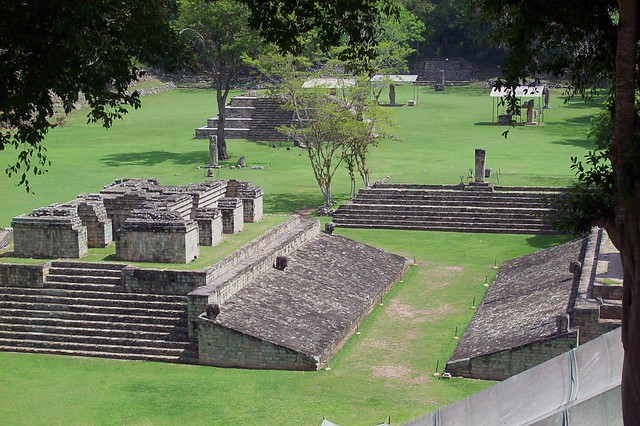
Copan Ball Court - Photo by Adalberto H. Vega

I never felt threatened or feared for my safety.   And talking with many others at the conference and on the post tours nor did they feel unsafe.   At night-time functions we would travel past various neighbourhoods back to the hotel.   I never saw anyone with a gun other than some army guy or from the police.   I never got a sense the city or the country was under siege.

It’s ironic – the heavy police and military presence from their perspective is to help make tourists feel secure.   Unfortunately it can have the opposite effect and the tourist thinks the country is so crime ridden they need all this protection.
...
Central America is really a hidden gem of the world – Mayan ruins, vibrant green countryside, friendly locals, colourful Colonial towns, beautiful beaches, lush rainforests, cultural attractions and it is very affordable.  

Don’t be deterred by travel warnings.  Be alert, cautious and exercise common sense – it’s no guarantee but driving a car or crossing a street in Toronto is far more dangerous.